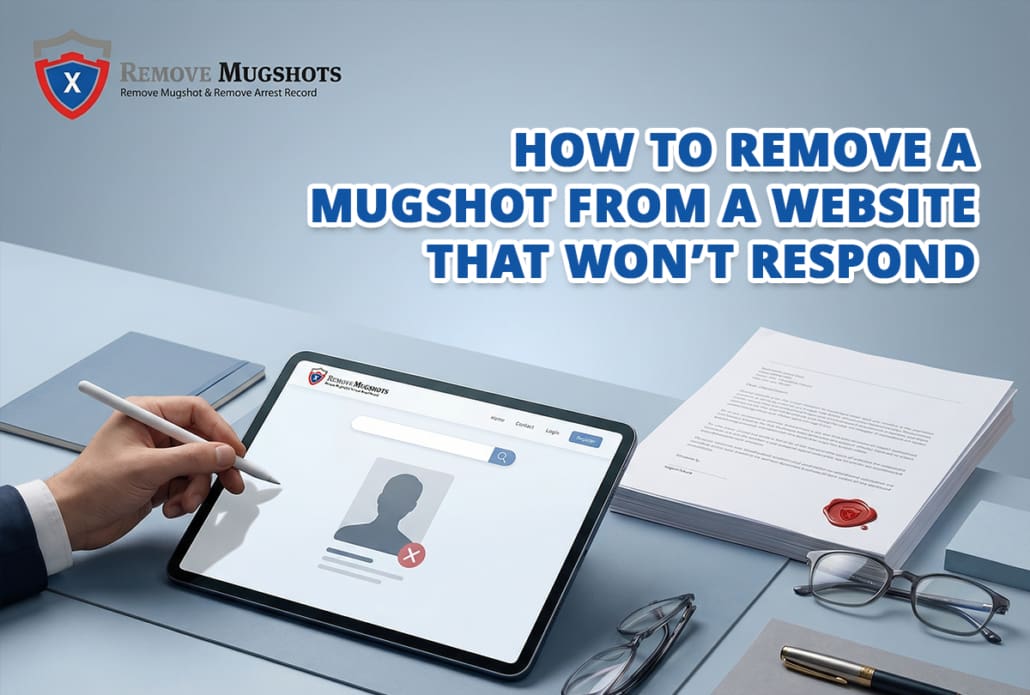
Finding your mugshot online can be overwhelming—especially if the website refuses to respond to your requests. Mugshot photos tied to old arrest records can appear in Google search results for years, damaging future employment, housing, or personal relationships. While some mugshot sites charge high fees for removal, others ignore takedown requests entirely.
If you need to remove a mugshot from a site that won’t respond, you still have legal and practical options. This guide explains why mugshots appear online, what laws apply, and the steps you can take to protect your online reputation.
Is your mugshot or arrest record still online?
Get a Free Case ReviewWhy Mugshots Are Posted Online
- Booking photo records: After an arrest, a mugshot becomes part of the arrest record. In many states, these are considered public records, accessible to the public and the media.
- Mugshot websites: Private websites scrape these records from official databases or court records and post them online, often ranking high in search engine results for your name.
- Profit model: Many mugshot sites use a fee-based model that charges individuals to remove their photos. Others monetize through advertising placed around the mugshot content.
Because of this, mugshots can remain visible online indefinitely, even if your charges were dismissed, your record sealed, or expunged. This persistent online presence can unfairly harm your reputation and opportunities.
The Consequences of a Mugshot Online
Leaving a mugshot online can cause lasting damage in several important areas:
- Employment: Employers often conduct online background checks and may reject candidates if they find mugshot photos, regardless of the outcome of the case.
- Housing: Landlords may deny rental applications after reviewing arrest information or mugshots during the screening process.
- Personal relationships: Friends, family, or acquaintances may form negative opinions based on outdated or inaccurate arrest records.
- Online reputation: A mugshot can overshadow years of positive achievements and contributions, affecting social media and professional interactions.
Even if charges were dropped or records sealed, the presence of a mugshot site can continue to cause harm and stress.
Legal Options to Remove a Mugshot
When a website ignores your takedown requests, escalating your approach is often necessary. Your available legal options depend on your state’s laws and the status of your criminal record.
1. Send a Formal Demand Letter
An attorney can draft a formal demand letter to the owner of the mugshot site or their registered agent. This letter typically outlines your legal rights, provides proof of case dismissal or expungement, and demands removal of the mugshot. A well-crafted demand letter demonstrates seriousness and may motivate compliance.
2. Use State Mugshot Laws
Several states have enacted specific laws regulating mugshot websites:
- Florida law requires mugshot sites to remove images if charges were dropped or a record was sealed, and prohibits charging fees for removal in many cases.
- Texas, Georgia, and other states have similar statutes mandating removal under certain conditions.
These laws provide a legal basis to compel removal and may allow you to sue for violations, including recovery of court costs and reasonable attorney fees.
3. File a Civil Suit
If a mugshot site refuses to comply with legal demands, filing a civil lawsuit may be necessary. Possible claims include:
- Defamation if the posted information is false or misleading.
- Privacy violations if the site refuses to remove legally protected content.
- Consumer protection violations occur if the site charges unlawful fees or engages in deceptive practices.
Keep in mind that litigation involves court costs and attorney fees, but it can be an effective tool to enforce your rights.
4. Explore Expungement or Record Sealing
If your arrest record has not yet been sealed or expunged, consulting with criminal defense attorneys can strengthen your case for mugshot removal. Once a record is sealed or expunged, you have a stronger legal right to demand that mugshot sites remove related images.
Practical Steps for Removal
Even if a website ignores your requests, there are practical actions you can take to improve your chances of removal:
Contact the Site Owner
- Use WHOIS lookup tools or the website’s contact page to find the site owner’s email address or registered agent.
- Submit a clear and polite removal request, including your full name, the URL of the mugshot, and any relevant legal documentation, such as expungement or dismissal orders.
Submit a Request to Search Engines
- Google and Bing provide tools to request the removal of outdated or harmful personal information from their search results.
- While this does not delete the mugshot from the original site, it reduces visibility in search engine results, which can lessen the impact.
Work With Reputation Management Services
If removal proves difficult, professional online reputation management companies can help suppress negative search results by promoting positive content and pushing harmful results lower in search rankings.
What If Nothing Works?
If the website refuses to respond and legal options are limited or unavailable, consider the following:
- Consult a qualified lawyer who specializes in mugshot laws in your state to explore all possible legal remedies.
- Document all removal attempts, including emails, demand letters, and search engine requests, to support any future legal action.
- Seek professional reputation management assistance to create and optimize new online content that can overshadow the mugshot in search results.
Preventive Measures
To reduce the risk of future mugshot or arrest information damaging your reputation:
- Expunge or seal records as soon as you are eligible to do so.
- Set up Google Alerts for your name to receive prompt notifications of new online mentions.
- Establish a robust online presence with professional profiles, an active social media presence, and engaging content to enhance your digital footprint.
- Engage a lawyer immediately if arrested to understand your rights and options for record sealing or expungement.
Conclusion
If you need to remove a mugshot from a website that won’t respond, you have multiple options beyond direct requests. Start by contacting the site owner and submitting removal requests to search engines. If those steps fail, explore legal remedies such as demand letters, state mugshot laws, or civil suits. Additionally, record sealing or expungement can provide stronger grounds for removal. When necessary, work with reputation management experts to suppress negative search results.
A mugshot does not have to define your life or online reputation. With persistence, legal knowledge, and the right support, you can reduce its visibility and regain control over your digital presence.