
Learn how to view public records for free to take control of the information that’s online about you.
There are a number of reasons why someone may look up public information about someone else. Maybe they’re conducting a background check before hiring an employee, taking on a roommate or going on a date. They could be verifying financial or legal information, or they might be looking into a person’s criminal history.
Is your mugshot or arrest record still online?
Get a Free Case ReviewIt’s also possible that someone is checking their own court case documentation or other records for a better idea of what’s available online.
Sometimes, looking up a person’s public information is harmless. However, this isn’t always the case.
Just because an individual’s information is public, that doesn’t mean it’s innocuous — it can still negatively impact their personal or professional life. This is especially true when it comes to arrest records and mugshots, which are among the most searched-for types of public records.
Here’s another consideration: It’s common for court case information, administrative records and other documents to be incorrect, misleading, or outdated. And simply having access to your own records doesn’t mean you have control over what they say or if they’re removed from the internet.
At RemoveMugshots.com, our removal services will erase your online arrest records and mugshot images from the internet fast. Contact us today at [phone] to learn more.
What Are Public Records?

LexisNexis defines public records as “legal and official documents, information, or data that are accessible and available to the general public…[and] are maintained by government agencies, institutions, or organizations.”
Common types of records include:
- Arrest records
- Bankruptcy filings
- Birth and death certificates
- Booking information
- Court dispositions and records
- Marriage and divorce records
- Mugshots
- Professional licenses
- Property records
- Tax assessments
- Voter registrations
Though the purpose of keeping these records public is for transparency, the information can lead to reputational harm for some people or businesses.
It’s also important to note that some records are exempt from disclosure. Those records may include 911 calls, adoption records, student records, trade secret information and similar types of documents.
What Is the Importance of Making Records Public?
There are a number of reasons for keeping corporate, criminal, government, legal and property records public:
- Accountability and Transparency: Giving the public access to these records increases transparency. Citizens are then able to hold organizations accountable for their actions.
- Business and Financial Transactions: Companies and individuals can use administrative records for business planning, due diligence and making financial decisions.
- Historical and Legal Research: Historians, legal professionals and researchers use court case documentation and other records for academic, historical and legal research.
- Protection of Rights: These records ensure that individual rights — like legal status and property ownership — are documented and safeguarded.
While public records are technically accessible by anyone, there are sometimes regulations in place to ensure people only access them for legitimate reasons. For example, in some states, certain records are restricted from public viewing if the details are particularly sensitive, like in a domestic violence case.
Are Public Records Actually Free?
When people hear the word “free” associated with public records, they assume this means “no cost.” That’s not always the case, though. These records are freely available, but they’re not necessarily free to access cost-wise.
While this varies by state and type of record, here’s an overview of how this might work:
Your county, court or state allows you to view public records online for no charge. However, this only allows you to see limited case details, such as the individual’s name, case number and charges. To download a more thorough document (or print it out), you’ll have to pay a fee. And if you’re requesting a certified copy, the issuing agency may need to approve your request and charge you an additional fee.
Here are other fees you may need to pay:
- Convenience fees when using an online portal
- Copy fees if you want extra copies of digital or physical documents
- Search fees to account for staff time, especially if you’re after archived or old records
Each of these charges may be small, but they can add up, especially if you want to access multiple records at the same time.
Data Aggregators
You also may come across a data aggregator that charges users to access case records and other documents. These sites are not run by government agencies. Instead, they scrape the internet to collect information from various sources, then put that information together to create a profile for each person in the database.
These sites charge for the convenience of accessing all of that information in one place, not for the information itself. While seeing basic information may be free, full reports are usually behind a paywall. Furthermore, some people-search websites charge a one-time fee, while others have subscription options.
There are pros and cons to using data broker sites. On the plus side, there’s a lot of information included in one profile. That information is also often enhanced with additional data, like past addresses and names of coworkers, family members or neighbors. If you’re trying to see all of your public record information in one place, using a data broker site can be a one-stop shop.
On the downside, though, this information isn’t checked for accuracy or kept up-to-date. Generally, data broker websites aren’t the most reliable when it comes to getting correct and current information about a person. Therefore, if you’re conducting serious research, you’re better off going through official agencies.
The people-search site business model raises ethical concerns, too, especially when it comes to arrest records, mugshots and other highly sensitive content. For-profit data broker sites will sometimes prioritize the most sensational content to drive traffic and clicks. Even though the information included on these sites is technically public, monetizing it is the main issue.
Today, there are some states that prohibit these sites from charging for content removal, giving users more control over their online information. If you’re having trouble removing your information from people-search sites, check state law to see if you can demand removal without having to pay for it.
We work on behalf of our clients to erase mugshots, arrest records, police reports and other personal information online. Give us a call at [phone] to get started.
Official Sources for Viewing Public Records

Instead of relying on a third-party website, which may have incorrect information or charge a hefty fee for access, go straight to government agencies to conduct your research. These resources may not be as quick or user-friendly as people-search sites, but they’re more accurate and less likely to charge sky-high costs.
State and County Court Sites
In most cases, civil and criminal records are maintained at the state or county court level. You should be able to access this information by visiting the appropriate court’s website.
Often, courts have online portals where you can look up civil and criminal case information, including many records about:
- Civil lawsuits
- Family cases
- Felonies
- Misdemeanors
- Traffic tickets
You’ll need the individual’s name or case number and filing date, most likely. From there, you should be able to access details including:
- Case numbers and filing dates
- Case status (open, pending or closed)
- Charges or claims filed
- Court dates and docket entries
- Defendant or party names
It’s not uncommon for this information to be available without having to pay a fee. However, there may be a good amount of information missing, either because it’s not available to the public or because it’s behind a paywall. That information may include:
- Dismissals
- Expungements
- Final case outcome
- Plea details
- Reduced charges
- Sealed records
Public access to records varies by state and county. While some courts will provide users with a lot of access, others only offer limited information. Some may even require you to make your request in-person.
It’s also possible that older cases won’t be digitized and therefore won’t be accessible online. This is most common in rural jurisdictions.
Local Sheriff or Police Department Websites
Law enforcement agencies usually have to publish records about arrests and detentions (temporary holds). Here’s the information you may be able to access from a law enforcement website:
- Arrest Logs and Booking Reports: Daily or weekly logs may show the name and age of arrested persons, arrest dates and locations, and charges at the time of booking. Note that these are arrests, not convictions.
- Inmate Rosters: Local jail inmate rosters, showing who’s in custody and their booking dates and charges.
- Mugshots: Booking photos are commonly published after an individual’s been arrested, but some agencies will remove them once the person is released.
Different agencies have varying retention policies. While some agencies may remove records after a certain amount of time or once the case has been resolved, others leave the information online indefinitely.
However, keep in mind that data broker sites tend to scrape law enforcement sites fast. That means they could post and spread your mugshot even if it’s removed from the source.
Department of Corrections Websites
State DOC sites usually provide access to information about people who have been sentenced to state prison. This information includes:
- Inmate Searches: Users can look for past and current inmates using their name or identification number.
- Sentencing and Incarceration Status: Records may include sentence length, offense category, facility location, admission and release dates, and parole or probation status.
Instead of reflecting arrest activity, these records usually include post-conviction information. You won’t be able to find information about people who were arrested but never convicted; people who served time in county jail only; or expunged or sealed cases.
County Clerk’s Office for Administrative Records
County clerks and recorders maintain non-criminal administrative records that may be accessed for research or verification. The county clerk’s office may have the following types of administrative records:
- Business filings and registrations, including partnership records.
- Property deeds and ownership records, including mortgage and lien information.
- Marriage licenses and summaries of divorce cases.
These records are generally easy to access, but getting a certified copy or full document may require extra steps and fees.
Freedom of Information Act Requests
If you want access to case records and other documents that aren’t online, you may need to submit a Freedom of Information Act (FOIA) request. These requests are often used to access:
- Archived or older records
- Internal correspondence or reports
- Records from agencies without public databases
To obtain these records, you’ll submit a FOIA request to the agency that holds the records and describe the documents you’re looking for. The agency has a legal requirement to respond, but they don’t have to release any or all of the documents you request.
It can take a few days to weeks or even months to get a response. It’s also possible that the agency will charge for making copies, retrieving the documents, or staff time.
If you are able to obtain the records, certain information may be redacted, such as:
- Juvenile records
- Personal identifiers
- Ongoing investigations
- Records protected by privacy laws
Making a FOIA request should be your last option. The process tends to be slow and limited, with a lot of restrictions on what information is released, if any.
Third-Party Sources for Viewing Records
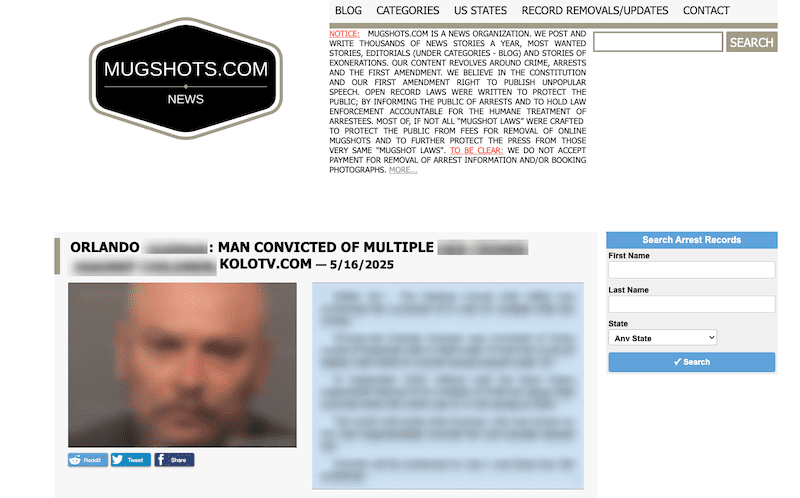
Even though using government sources is the best way to find case records and similar public documents, many people will still use Google Search or people-search websites to locate information. As mentioned, these tools can surface results fast, but they also carry a high risk of misinformation and outdated data.
Search Engines
The simplest way to see case records, court documents and more online is to plug the following into Google Search: [name] + [county] + arrest or [name] + [county] + court records. This type of search may point you to court or law enforcement websites, or it could surface third-party indexing sites.
Remember, search engines prioritize engagement and relevance, not necessarily accuracy or fairness. Arrest content tends to get a lot of clicks, and incorrect or older records can rank highly simply because they’re popular.
Data Broker Sites
Public record aggregator sites will offer a limited amount of information for free, such as a person’s name, age, city and state, and similar information. Previews are designed to encourage users to pay for full reports. Some will even suggest that there are criminal records to uncover, even if there aren’t.
The removal experts at RemoveMugshots.com will analyze search engine results to find and remove your personal information and booking photos online. Call us at [phone] for more information.
FAQ About Case Records and Other Documents
Are all public records free to view?
No. While many records may be free to view, full access often requires payment. Additionally, downloading documents or obtaining certified copies tends to come with a cost.
How long do mugshots stay online?
There’s no standard expiration period for mugshots that appear online. Some law enforcement agencies remove mugshots from public access once the individual has been released or the case is resolved. However, other agencies leave them online indefinitely. Furthermore, third-party data aggregators and mugshot sites can display booking photos indefinitely, regardless of whether they’re still on the original site.
Can mugshots be removed from the internet?
Yes, mugshot removal is possible, but it’s not automatic. Depending on state law, mugshot sites may be required to remove your content upon request. However, since mugshots are often copied and republished, removing them from one source may not remove them from the internet or Google search results completely.
Do expunged records disappear online automatically?
No. Having records expunged or sealed removes the case from public view on official government databases, but it doesn’t force third-party sites to update or remove already-published information. This is why expunged or sealed records can continue to show up online.
What’s the difference between arrest records and criminal convictions?
An arrest record shows that an individual was taken into custody, not that they were found guilty of a crime. A criminal conviction only occurs once the court legally finds the individual to be guilty.
Final Thoughts
Public access laws are intended to promote transparency, but unfortunately, they also lead people to define an individual’s reputation without knowing their full story. Viewing court documents and other records is a first step toward managing their impact on your online reputation.
Once records are visible online, our team can work with you to find them, remove or suppress them, and rebuild your reputation.
Get a free mugshot removal analysis today. Learn more here or call us at [phone] to speak with a team member.