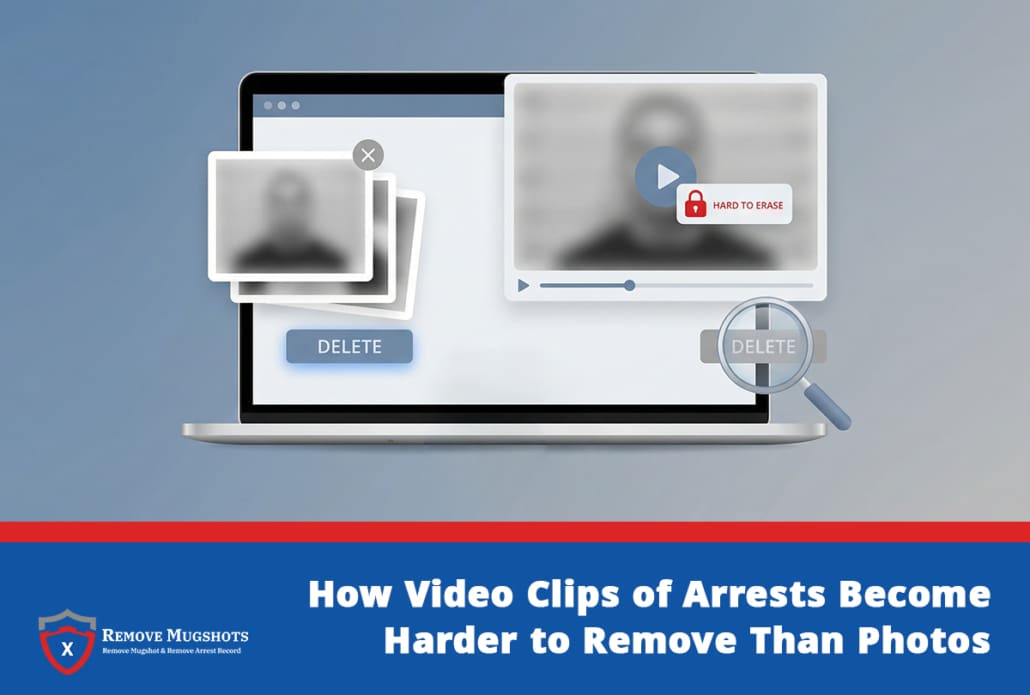
Every day, video clips of arrests are uploaded to websites and shared across social media. Unlike a single arrest record or photo, videos provide raw details — from the date and location to the actions of the individuals involved. Once these clips are published, they quickly spread, showing up in search results whenever someone looks up a last name.
For the person in the video, this visibility can damage reputation, affect housing or job opportunities, and linger online long after the case has ended. Understanding why arrest videos are harder to remove than photos is essential for anyone worried about privacy, accuracy, and long-term consequences.
Is your mugshot or arrest record still online?
Get a Free Case ReviewWhy Arrest Videos Spread Faster Than Photos
Photos of arrests are often attached to a single arrest record or local report. In contrast, video clips are:
- Easier to share: Users upload videos to multiple sites, often without accurate context.
- Engaging viewers: A video showing an individual in action is more likely to be viewed, shared, and commented on than a still image.
- Indexed differently: Search engines treat videos as high-value content, placing them at the top of search results.
Because of this, a video tied to an arrest can follow someone for years, even after the charges are dropped.
The Added Weight of Video vs Photos
Videos carry more detail than photos. A picture may show a face, but a video captures movement, sound, and interaction. This makes it harder to argue for context or accuracy later.
For example:
- A video may include bystanders shouting accusations that remain attached to the person’s name online.
- Reports linked to the video often include extra information — contact details, dates, and arrest data — that deepen the digital footprint.
- Even if the video is inaccurate or incomplete, viewers form quick, lasting judgments.
This is why videos of arrests create stronger, longer-lasting impressions than photos.
Legal Barriers to Removal
Removing videos of arrests from websites is much harder than removing a mugshot or single image. The challenges include:
- No uniform law: Each country, state, or site has different rules for handling arrest content.
- Public record issues: Arrests are often tied to data considered public information.
- Proof of harm: Individuals must demonstrate that a video has caused measurable damage, which can be challenging in legal proceedings.
- Multiple platforms: Even if one site removes the clip, copies remain on other platforms or in cached search results.
These barriers explain why videos stay online even after cases are dismissed.
The Human Impact of Arrest Videos
Arrest videos can change lives long after the event.
Stigma and Reputation Damage
Once a video is uploaded, it becomes part of how a person’s name is viewed online. Even if the arrest was wrongful, viewers often assume guilt.
Job and Housing Discrimination
Employers and landlords commonly search a last name online. If the first search results show arrest videos, it can unfairly limit opportunities.
Mental Health Effects
Living with the knowledge that personal moments are permanently available online can cause anxiety, depression, and social withdrawal.
Why Videos Are Harder to Remove from Websites
- Technical spread: Videos are copied, reposted, and embedded across many sites, making full removal almost impossible.
- Higher engagement: Search engines prefer video content, which means arrest clips often outrank written corrections.
- Unclear responsibility: It is often difficult to contact the original poster or identify who controls the content.
Even years later, arrest videos remain searchable by last name or arrest date, continuing to affect individuals long after the situation is resolved.
Steps Individuals Can Take
While removing every copy of an arrest video is rarely possible, individuals can take steps to reduce the harm:
- Know your rights: Understand state laws and your ability to request removals or corrections.
- Request takedowns: Some websites accept formal removal requests when arrests are expunged or records cleared.
- Seek legal help: Attorneys specializing in reputation and privacy can guide action when damages are severe.
- Build positive content: Publishing accurate information can push negative search results lower.
- Monitor search results: Regularly review what appears when you search for your name online to stay informed.
Conclusion
Videos of arrests are harder to remove than photos because they spread faster, carry more detail, and face stronger legal barriers. Once posted, they can shape search results, influence reputations, and follow individuals for years.
Understanding how these videos spread — and taking proactive steps to manage your online presence — is the best way to protect against long-term damage.