You log into a state website to renew your driver’s license.
You enter your name, date of birth, and account details.
Then something unexpected appears: arrest information you thought was long behind you.
For many people, this moment feels confusing and alarming. You are not being accused of a new crime. You are not in custody. However, past records suddenly become part of the process again.
Is your mugshot or arrest record still online?
Get a Free Case ReviewThis situation occurs more often than people realize. In most cases, it is not about guilt. Instead, it concerns how data systems share, store, and check information during license renewal.
Here’s why it happens, which systems get involved, and what you can do next.
Why License Renewal Triggers Arrest Checks
License renewal involves more than just updating a form. In many states, the department verifies your identity and public safety status.
When you renew, the department checks your information against official records to confirm:
- You are the correct person.
- Your identity details match existing data.
- No legal barriers affect your driving privileges.
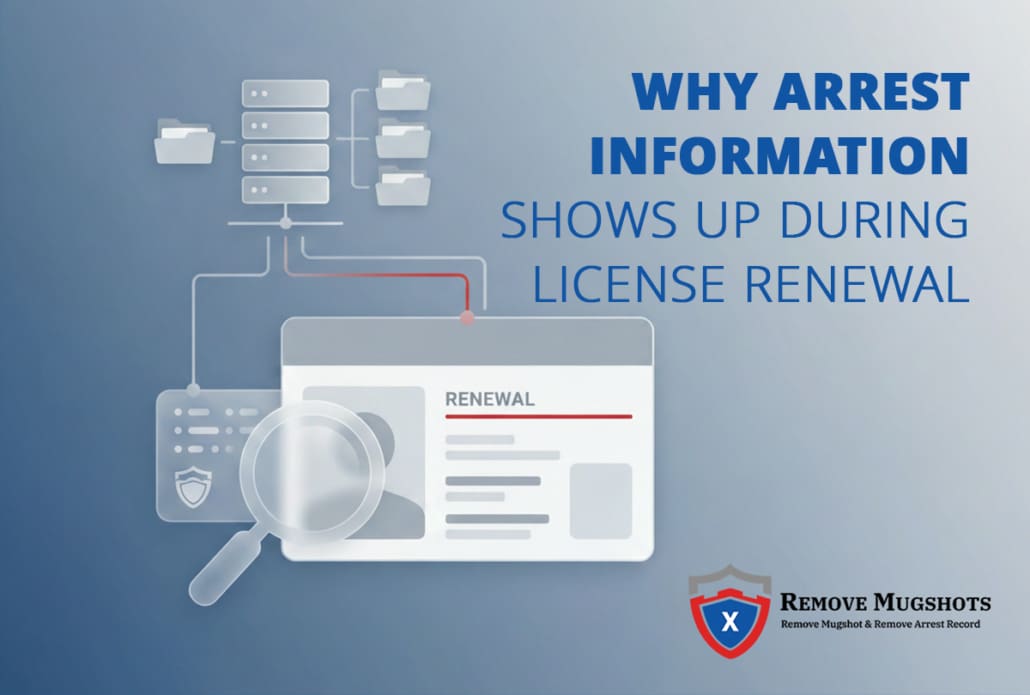
This process pulls data from multiple sources, including court records, county files, and law enforcement databases that store arrest information.
The goal is not to punish but to confirm eligibility.
What “Arrest Information” Really Means
An arrest does not mean you were convicted.
It does not always mean charges were filed.
And it does not mean the offense remains active.
Arrest information usually includes:
- A person’s name and birth date.
- The date of arrest.
- The agency or department involved.
- The facility where the individual was housed.
- Release dates or custody status.
This information can exist even if:
- Charges were dropped.
- The case never went to court.
- The offense occurred years ago.
That distinction matters because license systems often check records rather than outcomes.
Where the Information Comes From
Most license renewal systems pull data from official and public sources. These sources include:
- County court records.
- State law enforcement databases.
- Department of Corrections files.
- Government websites that post arrest logs.
For example, in states like Florida, you can often access arrest information through official gov websites. A simple search by name or exact match of birth date can reveal records that remain visible long after the case ended.
Once posted, multiple systems may access this data, even if the person no longer remains in custody.
Why Old or Minor Arrests Still Appear
People often ask why something from years ago appears now.
Several common reasons explain this:
- Records never sealed or expunged.
- Databases updated but not cleaned.
- Agencies shared information.
- The renewal process triggered a broader data check.
Some systems flag any arrest information, regardless of age or outcome. Others depend on how the record was filed or whether the court issued a removal order.
The system does not always know what is “relevant.” It only knows what exists.
What the DMV or Licensing Department Looks For
During renewal, the department usually checks for factors that affect driving eligibility, such as:
- Open charges related to driving offenses.
- Active warrants.
- Legal restrictions or suspensions.
- Identity conflicts are tied to records.
The presence of arrest information does not automatically block renewal. However, it can require review, documentation, or a response before approval.
Sometimes, people receive letters, emails, or requests for additional information after submitting the renewal.
Why This Can Feel So Sudden
Many people remain unaware that their arrest record still exists.
Others assume time alone removes it.
That assumption rarely holds.
Unless a record is formally sealed or expunged, it can remain visible indefinitely. Moreover, license renewal often becomes the first time someone confronts that reality.
The system does not warn you.
It simply performs the check.
What to Do If Arrest Information Appears
If arrest information appears during renewal, take a step back before reacting.
Start here:
- Read what appears carefully.
- Note the date, county, and agency listed.
- Confirm whether the information remains accurate.
Then determine whether:
- The case was dismissed.
- You were never convicted.
- The record should have been sealed.
- The information is outdated or incorrect.
Afterward, you may need to contact the court, request official documentation, or seek assistance to correct or remove the data.
Why Being Proactive Matters
Ignoring the issue rarely helps.
Guessing can make things worse.
Understanding what records exist, where agencies store them, and how systems access them gives you control. It also protects you from future surprises tied to employment, housing, or other official processes.
License renewal often marks just the beginning.
Additional Ways to Locate and Verify Your Arrest Records
If you want to know your arrest information before renewal, you can locate your records independently. Many state and county websites provide public access portals that let you search by name, date of birth, or case number. Using these tools helps narrow results and verify the accuracy of the data shown during renewal.
Some jurisdictions also offer assistance via phone or email to help you understand the records found. Being proactive by checking these sources saves time and reduces surprises when your license renewal arrives.
Understanding the Role of Race, Community, and Data in Arrest Records
It’s important to recognize that arrest information systems rely on data collected from various sources. Sometimes, the data reflects broader social factors such as race or community demographics. These factors influence how agencies maintain and access records, which explains why some people see outdated or incomplete records.
Being aware of this context helps you understand the complexity behind arrest information and why it appears during official checks.
A Final Note
Arrest information appearing during license renewal does not define you.
Instead, it reflects the fragmented nature of data systems across departments, counties, and public databases.
The good news is that you can often address this information.
However, it requires awareness, documentation, and the right next steps.
Knowing why it appears is the first step toward preventing it from recurring.