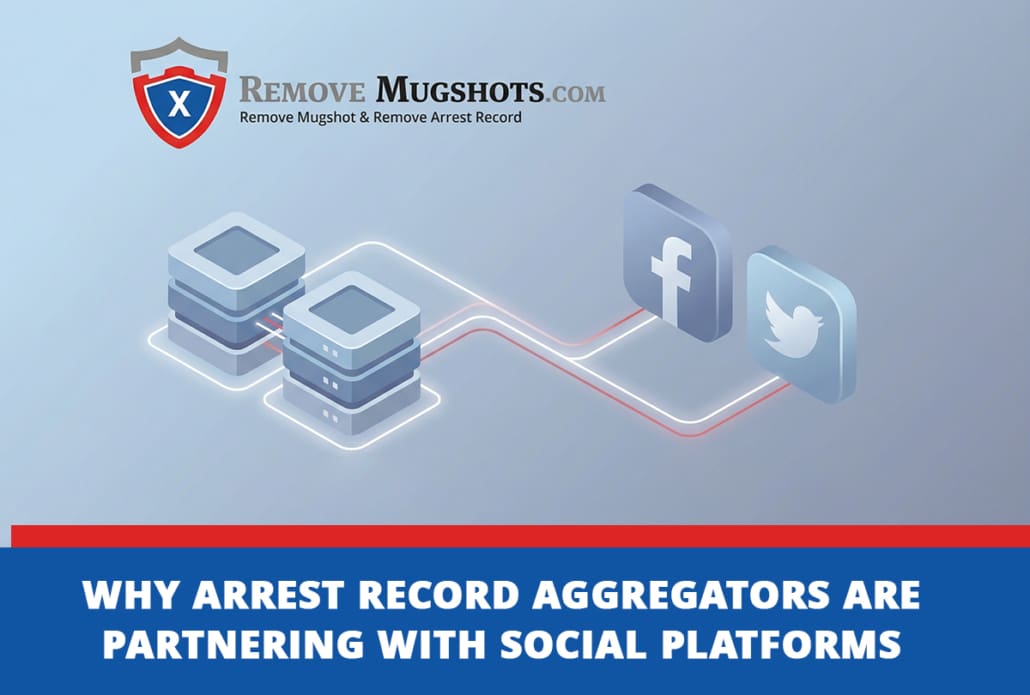
Imagine scrolling through Facebook and seeing a sponsored post that shows a local arrest record — not because you searched for it, but because a data broker sold it.
That’s not fiction. Arrest record aggregators and social media companies are quietly forming partnerships that blend criminal justice data from law enforcement agencies and government agencies with user behavior. The result is a new kind of data economy — one that trades on public information, algorithms, and personal exposure.
What Are Arrest Record Aggregators?
Arrest record aggregators are companies that collect, organize, and sell public criminal data.
They pull information from county court records, police departments, state and federal law enforcement agencies, and government databases. The data often includes arrests, mugshots, warrants, court documents, and sometimes sex offender registry details.
Is your mugshot or arrest record still online?
Get a Free Case ReviewThese platforms operate under federal laws and state regulations that make criminal records public, but they often blur the line between transparency and exploitation. Many function as consumer reporting agencies — similar to background check providers — though not all comply with the Fair Credit Reporting Act (FCRA). This act regulates accuracy, consent, and permissible use in consumer data reporting.
For most people, the result is simple: a permanent online profile based on past arrests — even if the record was dismissed, sealed, or expunged. This situation can significantly affect a person’s ability to obtain employment, housing, insurance, or government benefits.
Why They’re Partnering With Social Platforms
Social platforms hold what arrest record sites don’t — personal context.
They track user interests, interactions, and locations. When combined with criminal record data, this creates powerful targeting tools for advertisers, private investigators, employers, and law enforcement officers.
Partnerships between aggregators and platforms like Facebook or X (formerly Twitter) often focus on three goals:
- Data accuracy: Cross-checking public records with user-submitted information to verify identities and reduce errors.
- Ad targeting: Delivering background-check ads or public record “alerts” to users likely to engage based on behavioral analytics.
- Behavioral analytics: Using criminal data to refine algorithmic predictions about risk, credibility, or potential involvement in crimes.
These collaborations expand the reach of arrest data while blurring ethical boundaries. What starts as a “public safety” feature can easily become digital profiling that disproportionately affects vulnerable populations.
How the Data Exchange Works
The exchange usually flows both ways.
- Aggregators supply criminal history data — arrest dates, charges including serious offenses like statutory rape or aggravated assault, court documents — pulled from state and county systems.
- Social platforms provide behavioral signals — such as search patterns, location data, and engagement metrics — that enrich a subject’s data profile.
- Both sides profit from improved targeting and larger audiences, leveraging the value of combined data.
Federal and state privacy laws do not require platforms to confirm whether they use the information for background checks, marketing, or “public interest” purposes. This legal gray area allows these integrations to continue with minimal oversight, depending on the jurisdiction.
The Legal Framework (and Loopholes)
The Fair Credit Reporting Act (FCRA) limits how consumer data can be used for employment, insurance, or credit decisions. But most arrest record aggregators claim they are not “consumer reporting agencies,” sidestepping these rules.
This loophole means:
- Employers and landlords may still use these sites for informal background checks without following FCRA regulations.
- Individuals have little control over the accuracy or removal of their information.
- Errors in criminal databases — such as misidentified suspects, outdated records, or failure to account for expungements — can spread instantly and cause harm.
Federal agencies, such as the Equal Employment Opportunity Commission (EEOC), warn that using arrest records in employment decisions can result in discrimination claims. Yet many businesses continue to rely on aggregator data because it is cheap, fast, and publicly accessible.
Why It Matters for Privacy and Reputation
Once arrest information appears online, containing it becomes nearly impossible.
When social platforms amplify that data through ads or shared content, the damage multiplies; even minor offenses can follow victims or suspects for years, shaping how others perceive them — employers, neighbors, or potential partners.
Unlike official court databases or law enforcement records, aggregators rarely update or remove outdated information. That means an arrest — even without a conviction — can remain searchable forever, creating a permanent stigma.
This merging of criminal data and social behavior turns reputation into a marketplace. It rewards attention, not accuracy, and can disproportionately affect people in states like California, where laws governing data access and removal vary.
The Risks of Normalizing Criminal Data Sharing
- Permanent stigma: People who were never convicted can face long-term harm to their personal and professional lives.
- Algorithmic bias: Predictive tools can reinforce racial or socioeconomic bias already present in criminal records, leading to unfair outcomes.
- Privacy erosion: Data collected for “public safety” is now used for ad targeting, content personalization, and other purposes beyond original intent.
- Legal exposure: Inaccurate or misused data can lead to defamation claims and noncompliance with federal privacy laws, potentially resulting in penalties for aggregators and platforms.
In short, public data isn’t always harmless — especially when combined with personal behavior online and used without clear regulations or oversight.
What You Can Do
If you find your arrest record or mugshot online, take action early.
- File removal requests with aggregators that violate their own policies or fail to verify data accuracy.
- Submit expungement documents if a court has cleared or sealed your record.
- Monitor search results regularly for recurring pages or new reposts that may harm your reputation.
- Seek professional help from a reputation management firm or legal counsel. They can suppress outdated or harmful content and navigate complex jurisdictional regulations.
Our experts help clients navigate this process every day.
We combine proven removal strategies with legal support and ongoing monitoring to protect what matters most — your name and your credibility online.
Final Takeaway
Partnerships between arrest record aggregators and social media platforms highlight a growing truth: privacy isn’t disappearing all at once — it’s being sold in pieces.
Until stronger laws close the gaps between “public data” and “personal data,” individuals must take a proactive role in managing their digital presence.
Controlling your online reputation isn’t optional anymore — it’s essential.