
Why Corrections And Updates Rarely Reach Page One
December 10, 2025 Legal Tips
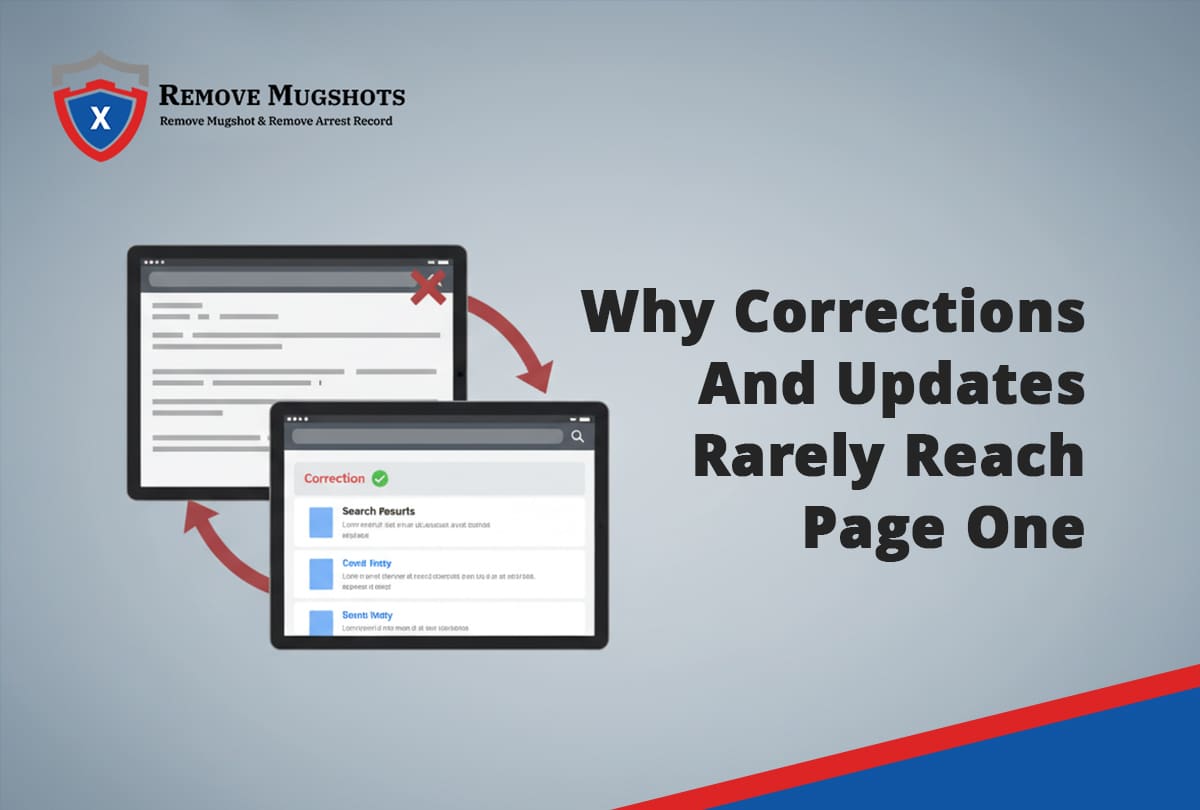
Arrests and mugshots stay visible longer than most people expect. Even when a case is dismissed, corrected, or expunged, the first page of search results often does not reflect the update. The original story remains on page one, while the correction rarely does.
This situation creates a real reputation problem that affects not only the individuals involved but also the broader community. Public perception is shaped by what is most visible, influencing everything from hiring decisions to community trust and even family relationships. Updates that show what actually happened come later, are published on different pages, and rarely end up in the same prominent position.
People see the arrest, but they do not see the correction. This discrepancy is why mugshot removals and arrest record clean-up require strategy, not just paperwork.
How Page One Works
Search engines reward content that is clicked, shared, and repeated. Consequently, arrests from local jails, county courts, and other correctional institutions tend to stay visible.
A typical pattern unfolds as follows:
- An arrest appears online.
- Local news covers it.
- Mugshot pages pick it up.
- Social platforms repeat it.
- People click on it.
Those clicks train algorithms. As a result, page one becomes a record of what happened on the day of the arrest, not what happened later in court or during parole.
The correction comes later, such as:
- charges dropped
- probation completed
- sentence changed
- case dismissed
- record sealed
By that time, however, interest had faded. There are fewer clicks, fewer comments, and no headline.
In search results, attention becomes authority.
Why Corrections Lose Visibility
Three main reasons explain why corrections do not reach the first page:
1. The Original Story Had Attention
The arrest creates immediate interest with details like:
- names
- charges
- mugshot
- location
People read it, share it, and talk about it. Victim services, agencies, and local programs follow it closely at first. It feels urgent, causing the page to move up.
Corrections, on the other hand, do not receive the same level of interest. They rarely go viral.
2. Updates Occur in Different Places
Updates often appear:
- on court pages
- in state departments
- in archived forms
- on federal bureau pages
- inside PDFs
These updates are harder to find and are not written for the public. They sit deep inside systems used by professionals, not everyday users.
Search engines interpret that as low demand.
3. Most People Do Not Look Twice
Most users never go beyond the first page. They see the arrest and assume the rest.
They do not search for:
- “case update”
- “dismissal”
- “expungement”
- “correction”
This is how an old mugshot continues to shape how an individual or family is viewed in a community, even when the sentence or conviction has changed.
Why This Matters
Arrest information is not just information; it becomes identity.
It can affect:
- employment and hiring
- probation and reentry
- community programs
- education and training
- family stability
- long-term outcomes
A single image or headline can follow someone for years, even after they have completed every requirement set by the court.
Corrections rarely serve the same impact as the original event.
Page One is a Battle of Attention, Not Accuracy
Search engines are not court records. They do not determine guilt or innocence. Instead, they show what most users engaged with.
That means:
- old mugshots remain
- outdated news stays visible
- new outcomes are buried
This is not personal; it is an algorithm.
Algorithms do not go back and fix the record on their own.
What Helps Corrections Reach Page One
Several practical strategies make a difference:
Publish Something New
New pages work better than old updates.
Examples include:
- a professional biography
- a news story about reentry
- community work
- training or education
- leadership roles
- care for families
- service in local programs
These create a different form of visibility and contribute to building a positive online reputation that reflects the current reality.
Use Consistent Images
Photos matter. A new professional photo can push a mugshot down faster than a correction notice.
Control Your Own Pages
A business name, personal website, or organization page provides something current for search engines to use.
Build a Network of Pages
Not just one page, but a variety:
- social profiles
- local pages
- program listings
- publications
- events
Search engines respond to activity and diversity of sources, which helps corrections and positive updates gain traction.
Track Over Time
Search results are not a one-time task. They change over months and years. Ongoing updates are needed, especially after October, September, or November when news cycles shift.
Limitations
It is important to be realistic:
- Some arrest pages cannot be removed.
- Some copies stay in cloud storage.
- Some sites are operated outside the country.
- Some jails and correctional agencies never update public pages.
The goal is not to erase history. Instead, it is to provide context, accuracy, and current information that reflects who the person is today.
Why Corrections Matter for Reputation
Many people complete their sentences, follow the law, and reenter their community. They work, raise children, and form stable lives. They improve behavior and take responsibility.
However, search results do not always show that.
This is why reputation management matters. It is not about hiding; it is about balance.
A correction page or court notice rarely serves the same purpose as the original arrest story. Without help, the update will never reach the same level of visibility.
Conclusion
Corrections and updates rarely reach page one because they arrive late, attract less attention, and live on pages that people never visit. Search engines respond to behavior, not fairness.
If you want the full story to appear, you must create it and make it visible by:
- publishing accurate updates
- building new pages and profiles
- using strong images
- sharing good news
- maintaining activity
People deserve to be seen for who they are now, not for one moment that occurred years ago.
Search results shape perception. Perception shapes opportunity. A single outdated page should not define a person’s future.
By understanding the dynamics of search engine algorithms and the role of community-based programs, parole updates, and correctional resources, individuals and advocates can better navigate the challenges of online reputation management. Partnering with professionals like RemoveMugshots.com, who are committed to innovation and evidence-based practices, can help ensure that corrections and updates receive the attention they deserve.
Share This Story


Fast Removal