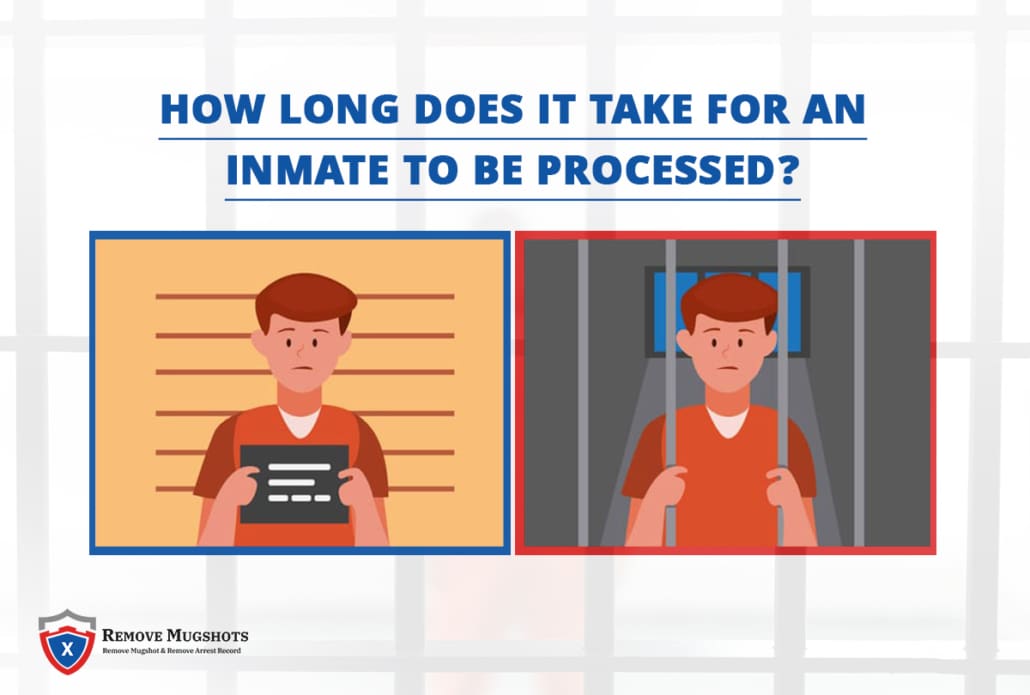
Anyone facing arrest, or supporting a loved one through it, wants a straight answer to one question: how long does it take to process an inmate? The intake process can list someone in the system within two hours, though full records often take one to three days to appear.
Living inside a facility with other inmates is stressful enough. Once the reception process wraps up, personal information often becomes searchable online for anyone to find.
Is your mugshot or arrest record still online?
Get a Free Case ReviewThis guide walks through the main steps of inmate intake, when records and mugshots typically go live, how VINELink fits into the picture, and what you can do to get inmate information removed from search results before it causes lasting damage.
Is a mugshot or arrest record still showing up online? Get a free case review.
While no one entering prison can control the intake process, knowing what to expect can help you prepare for what comes next. Call our content removal experts today for a free consultation.
The Basic Steps of Intake and Booking
The steps below generally apply across the arrest process, though they vary by facility. A local or county jail usually holds someone awaiting trial or serving a short sentence, while prison houses people convicted and sentenced to longer terms. Someone in jail may also face repeated court appearances while their case remains pending.
The full process usually takes 2 to 12 hours, with most cases falling in the 2 to 8-hour range.
1. Staff Record Your Information
Booking begins the moment someone enters a jail or prison. An intake officer opens a new record with the person’s full name and date of birth, logs the charges, and often assigns a prison number.
Most facilities now handle this digitally, though many counties still maintain physical arrest records. Records review typically takes 30 minutes to 2 hours, and background or warrant checks add another 1 to 2 hours.
2. Staff Take the Booking Photograph
The mugshot comes next. What once took days now takes seconds. Staff line the person up for two shots, front and side, then collect fingerprints and other biometric details, a process that usually runs 30 to 60 minutes total. Officials upload the photos into the record right away.
3. Staff Conduct a Pat-Down or Full Search
A pat-down happens during every booking. Officers decide how thorough the search needs to be, and that choice can affect how quickly someone shows up in the system. A strip search can occur even for a minor charge, such as failing to pay a fine. Rules vary by facility.
4. Staff Take Personal Property
Depending on the situation, staff may take a person’s clothing and belongings during intake. Everything is returned at release, except for anything flagged as contraband or evidence. Logging and inventorying property usually take 15 to 30 minutes, though it can take 30 minutes or more when someone has a lot of belongings.
5. Staff Take Fingerprints
Fingerprinting is standard at every facility, county, or federal. Some counties fingerprint before taking the booking photo. Either way, officials scan the prints into both local and nationwide databases.
6. Staff Check for Outstanding Warrants
With a name, photo, and fingerprints now on file, the system searches for outstanding warrants, charges, or fines. Complex charges or judge-issued orders may require additional paperwork, slowing things down.
7. Staff Conduct Health Screening and DNA Sampling
Health screenings have grown more thorough since COVID-19. Most facilities now conduct an initial medical check to address immediate health needs and assess contagious disease risk, often paired with a medical history questionnaire. An injured or intoxicated person may need medical clearance before intake can continue, adding delays. A mental health interview and tuberculosis test frequently round out this step.
Processing times increase with intake volume, overcrowding, staffing shortages, and high-arrest periods such as weekends and holidays.
After booking, staff may place someone in temporary holding for an hour or more while classification finishes. That placement, which can include protective custody, depends on the charges, safety risk, and available space.
Only after every step above wraps up does police save the record and enter it into the system.
How Long Does It Take for an Inmate to Show Up in the System?
Timing depends on the county or facility, its policies, and current intake volume.
Most correctional facilities upload a complete inmate list to their system daily, and a person’s information can become searchable as little as two hours after arrival. High-volume jails can push that back several more hours.
Recording the information is only the first step. Booking staff cross-check new arrests against other records for outstanding warrants and fines, searching by name, photo, fingerprint, and sometimes DNA. That means other facilities and organizations also receive the arrest record.
Family members searching for answers during this window should know that inmates typically get phone access only after the initial administrative steps are complete. One organization worth knowing about is VINELink.
If a listing still hasn’t appeared, contact the assigned facility directly for an update.
What Is VINELink?
VINELink partners with local and state agencies to keep offender data accurate and give crime victims reliable information about the people who harmed them.
That mission, however, can work against people whose charges eventually get dismissed. VINELink stores the offender information it receives from law enforcement and correctional facilities, then publishes some or all of it on its website. It also notifies victims when an inmate is released.
Police update VINELink’s system nearly in real time with official facilities, as long as the connected facility stays online. For non-federal inmates, VINELink is often the best resource after official channels. Information typically appears there within two hours to a day.
VINE does not remove offender information on request. It instead directs people with concerns to report inaccurate data to the arresting facility.
Experienced lawyers and removal specialists can act as a third party here and, in select situations, have certain information taken down. Whether that’s possible depends entirely on the details of the case.
How Do You Get Removed From an Inmate Search?
Leaving a county or state facility typically removes someone from the inmate search within a window of two hours before release to a full day after.
Federal cases work differently. Federal prison records for anyone processed after 1982 remain online indefinitely, including some people who never actually served time in a federal facility. Records may still cover people who were:
- Detained before trial
- Held as a material witness
- Jailed for civil contempt
Removing information from a federal system requires a formal court proceeding, so hiring a lawyer is the practical path forward. An experienced attorney can evaluate the specifics of a case and recommend next steps.
How Long Until Inmate Records Appear on Mugshot Websites?
Mugshots and related booking details typically surface online within one to three days of an arrest.
If you’re searching Google for information about yourself or a loved one, avoid clicking on mugshot websites or images. Every click on a search result signals relevance to Google’s algorithm, and the more traffic a page gets, the higher it climbs in search rankings. The goal is to keep inmate information from appearing to be a relevant answer to a search for someone’s name.
Private search engines like DuckDuckGo, or non-U.S. options like MetaGer, are safer for this kind of research. Better still, skip mugshot websites entirely and let a removal team handle it.
Call today to speak with a reputation expert about mugshot removal options.
Protecting Your Information From Public Search Results
Acting quickly gives you the best shot at keeping inmate records and photographs out of search results. If you or someone you know has been arrested and you’re worried about the impact on their online reputation, speed matters.
At NetReputation, our team monitors inmate records across the internet around the clock and maintains direct connections with major national and regional mugshot websites. That means we can often catch and remove listings before they go live, work that can protect a person’s relationships, career, and future.
If an arrest has already happened, there’s still a path forward. Reach out through our contact page to learn about record removal and the next steps available to you.
We locate every online instance of your listing, work to eliminate those mentions, and help rebuild a stronger, more accurate digital presence, including arrest and incarceration records tied to your name.
Contact our team today to learn more.