People are often surprised when they search for a court case on Google and see information from court records, even when full access to those records is behind a paywall. A snippet may show a case number, the courthouse, the county, or a short section of documents filed with the court. The site may require payment, registration, or a request form to obtain the full record, yet part of the information still appears for free in search results.
This can feel confusing. It may even seem strictly prohibited. But it is not.
Is your mugshot or arrest record still online?
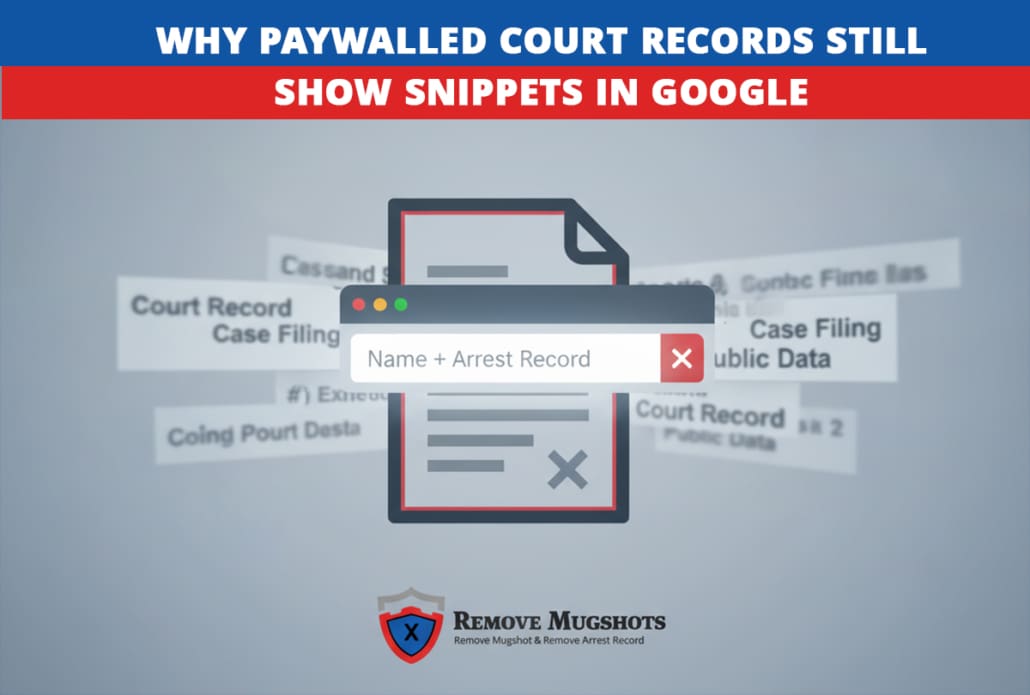
Get a Free Case ReviewSnippets appear because most court records are public. Even when a site charges for documents, the underlying information is public by law. Google reads what is publicly displayed, indexes it, and shows a short preview so people can find the right case.
Court Records Are Public by Default
Court records and documents filed with a court are considered public records unless sealed by a judge. The rules are simple:
- a case is filed
- a court creates a record
- the record becomes public unless the judge orders otherwise
This applies in state and county courts, and even in the Supreme Court. A fee or paywall does not change the public status. It only changes how a person gets access.
You may have to pay to view full documents, but the case information remains public.
Why Google Shows Snippets
Google shows snippets for one particular purpose: helping people understand what they are clicking on before they take action. A short excerpt provides enough information to determine whether the page has the correct case.
These snippets appear because Google:
- sees public text on a page
- reads it through automated crawling
- indexes what is visible
- displays a short preview in search results
The snippet may include:
- case number
- parties involved
- date filed
- county
- status
- judge
This is not a copy of the record itself. It is a small part of the information displayed openly on the site.
Paywalls Protect Full Access, Not Public Status
A paywall prevents someone from viewing the full documents. It does not remove the record’s public nature. Paywalls mainly cover:
- scanned documents
- PDFs
- orders
- transcripts
Google does not get full access to those. It only reads what is visible without logging in. This is how it works on most court sites:
- public text is readable
- full documents require payment
- snippets come from the public part
Visitors who click often see a message like:
“To view this document, accept the conditions and pay the fee.”
Google does not bypass this. It cannot view protected pages, orders, or complete records unless they are public.
Cached Snippets Persist
Snippets may continue to show even if a site later adds a paywall. This happens because:
- Google indexed the page when it was public
- the site later restricted access
- the cached text remains in search
To remove it, the site must request removal or update instructions in Search Console. Until then, copies may persist.
Accuracy, Completeness, and Legal Notes
Most court sites include clear warnings, often near the search box:
- information may be inaccurate
- no implied warranties
- not intended for any particular purpose
- do not rely on it without review
This protects the court from liability. The text is standard:
“Information is for public access only. Accuracy is not guaranteed. Read conditions before use.”
Anyone searching must understand that the court does not promise completeness. If a person needs official copies, they must order them directly from the courthouse.
Why Privacy Concerns Remain
Even though viewing full documents requires payment, the snippet alone may expose information about an individual. This can cause problems, especially when:
- names appear
- case information affects employment
- old cases show up when someone is searched
People assume the result is hidden behind a paywall. But the snippet is still public.
Removing it is not simple. Courts cannot erase public records without a legal order. The site may remove display, but other copies can remain.
When Snippets Should Not Appear
A snippet should not show if:
- the record is sealed
- the judge issues an order
- the state restricts access by law
In those cases, information is not public, and Google should not index it. If snippets still appear, the site must act:
- block crawling
- submit removal
- update robots.txt
- notify Google of the order
This is rare, but it happens. Most paywalled cases are open cases with controlled access.
What Users Need to Know
When you click a link in search results, you agree to the conditions of that site, even if you only read the public snippet. If a link leads to a court record, you should assume:
- the record is public
- the information has legal effect
- the site may charge for full access
- accuracy is not fully guaranteed
If you need certified copies, you must go to the courthouse or request them officially.
Conclusion
Snippets from paywalled court records appear in Google for a straightforward reason:
The records are public.
A paywall charges for access to the full document. It does not change the public status of the information. Google indexes what is visible on the page. Removing a snippet requires legal steps and a clear order, not just a complaint about paywalls.
The result is a system where:
- the public can find case information
- courts maintain control over documents
- Google shows short previews
- access to full records still costs money
It is confusing at first glance, but it makes sense when you understand the difference between public access and full access.